-
-
-
Range Road, Rawalpindi
Welcome to Al Meer Sourcing & Cargo Company
Please fill out the form below and we will get back to you as soon as possible.

Al Meer Sourcing & Cargo Company connects international suppliers with customers and businesses in Pakistan. We support product sourcing, supplier coordination, cargo consolidation, freight selection, import documentation, customs clearance and delivery planning based on your shipment requirements.
29
Aug
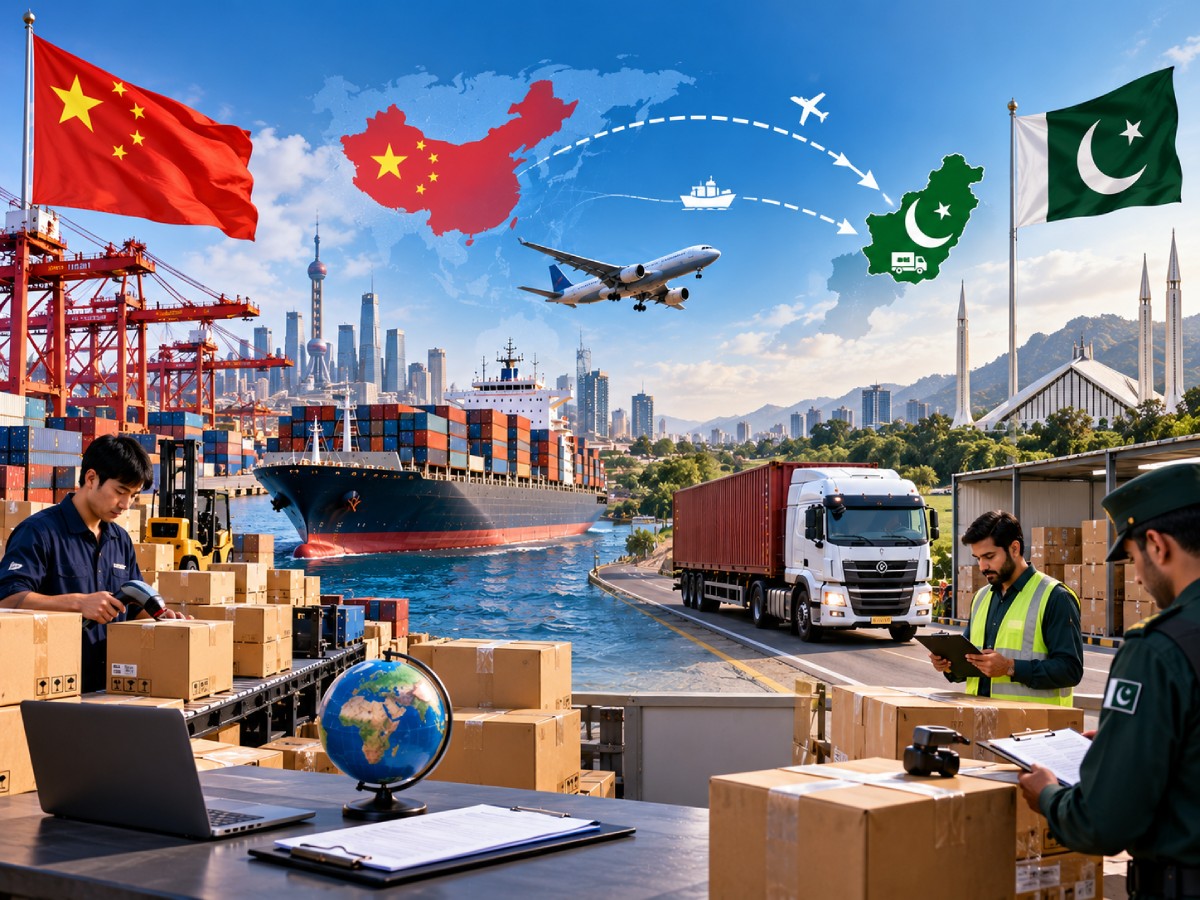
Importing products from China to Pakistan has become an increasingly popular option for businesses, wholesalers, retailers, e-commerce sellers, and entrepreneurs looking to source products at competitive prices. China offers a huge manufacturing base, a wide range of products, flexible quantities, and numerous sourcing options for Pakistani businesses.
However, importing from China is more than simply finding a supplier and placing an order. You need to select the right supplier, negotiate the correct price, verify product quality, understand shipping options, prepare import documentation, calculate customs duties and taxes, and make sure your shipment complies with Pakistan's current import regulations.
In this guide, Almeer Sourcing & Cargo Company explains how to import products from China to Pakistan in 2026, from finding a supplier to receiving your goods in Pakistan.
China is one of the world's largest manufacturing and sourcing markets. Pakistani businesses can source everything from electronics and mobile accessories to machinery, garments, home products, packaging materials, tools, furniture, and industrial products.
Some of the main reasons businesses import from China include:
For businesses purchasing products in larger quantities, sourcing directly from China can potentially provide better margins than buying through local wholesalers.
The first step is to clearly identify the product you want to import.
Before contacting suppliers, determine:
You should also research whether your chosen product is permitted for import into Pakistan.
Pakistan's import rules are governed by the applicable Import Policy Order and subsequent amendments. Because regulations can change, particularly for specific product categories, always check the current requirements before placing a commercial order. The Ministry of Commerce lists the current Import Policy Order and its amendments.
Finding the right supplier is one of the most important parts of the importing process.
You can find Chinese suppliers through:
Do not select a supplier based only on the lowest price.
Before placing an order, check:
A supplier offering a significantly lower price than everyone else may not necessarily offer the best value.
If possible, order samples before purchasing a large quantity.
A sample allows you to check:
For larger commercial orders, inspecting a sample before production can help reduce the risk of receiving products that do not meet your expectations.
Once you identify a suitable supplier, negotiate the complete purchase terms.
Ask about:
Do not look at the product price alone.
Your actual landed cost can include:
Product Cost + China Local Charges + Freight + Insurance (if applicable) + Customs Duties + Taxes + Clearance Charges + Delivery Charges
This is why calculating the landed cost before ordering is extremely important.
There are several ways to transport goods from China to Pakistan.
Air freight is generally suitable for smaller, lighter, or time-sensitive shipments.
Advantages include:
The disadvantage is that air freight generally costs more per kilogram than sea freight.
Sea freight is commonly used for larger and heavier commercial shipments.
It can be suitable for:
Sea freight normally takes longer than air freight, but it can offer a lower transportation cost for larger shipments.
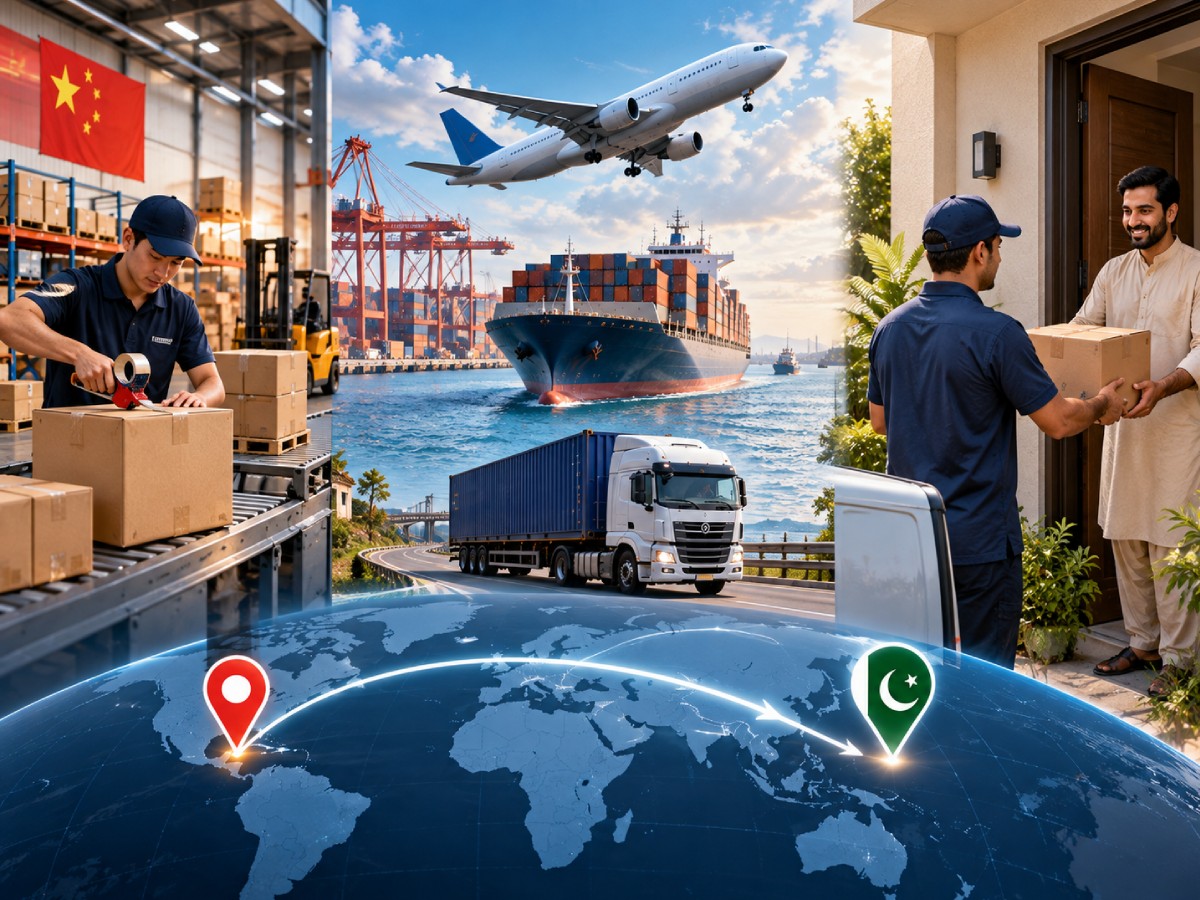
Door-to-door cargo services can simplify the importing process by coordinating transportation from the supplier in China through to the destination in Pakistan.
Depending on the arrangement, the service may involve:
The exact services included depend on the shipping agreement, product, route, and applicable customs requirements.
When purchasing from China, you may come across terms such as:
Understanding the agreed Incoterm is important because it determines which party is responsible for particular costs, transportation stages, risks, and responsibilities.
Before accepting a quotation, ask your supplier or freight forwarder exactly what is included.
Every imported product needs to be classified correctly for customs purposes.
The relevant tariff classification helps determine:
An incorrect classification can lead to additional costs, delays, or customs issues.
For this reason, importers should verify the applicable PCT/HS classification for their specific product before shipment.
One of the most important steps is calculating the expected landed cost before ordering.
Depending on the product and applicable rules, an imported shipment may be subject to customs duty and other taxes or charges.
The exact amount depends on factors such as:
Do not assume that every product has the same duty rate.
For accurate costing, confirm the applicable tariff classification and current rates before placing your order.
Commercial imports require proper documentation.
Common documents may include:
The exact documentation depends on the product, shipment type, payment method, and applicable Pakistani regulations.
Pakistan uses digital customs systems for import and export clearance. FBR describes WeBOC as its web-based customs clearance system for processing goods declarations and customs clearance.
Payment arrangements should be agreed with your supplier before the order is finalized.
Depending on the transaction and applicable regulations, import payments can involve methods such as:
Pakistan's foreign-exchange rules regulate import payments, and importers should work with an authorized bank to ensure the transaction follows the applicable State Bank of Pakistan requirements.
SBP has also issued instructions allowing authorized dealers to process certain import advance payments subject to appropriate due diligence and applicable requirements.
Because banking and foreign-exchange requirements can change, confirm the current procedure with your bank before making an international payment.
When your shipment reaches Pakistan, it must go through the applicable customs clearance process.
Depending on the shipment, customs may review:
Pakistan Customs uses risk-based processing through WeBOC, with consignments routed through different clearance channels depending on the customs assessment.
Using an experienced customs clearing agent or logistics company can help simplify this stage, particularly if you are importing commercially for the first time.
After customs clearance and completion of the required procedures, the shipment can be released for delivery.
Depending on your shipping arrangement, your goods may be delivered to:
Before accepting the shipment, check the cartons and products for visible damage or shortages.
There is no single delivery time for every China-to-Pakistan shipment.
The timeframe depends on:
Air shipments are generally faster than sea shipments, while larger commercial shipments may require more preparation and clearance time.
For an accurate estimate, ask your freight forwarder for a current transit-time estimate based on your exact origin, destination, cargo type, and shipping method.
The total cost depends on the product and shipment.
Your total landed cost may include:
For this reason, a product that appears cheap on a Chinese marketplace may not necessarily be cheap after all import costs are included.
Pakistani businesses import a wide range of products from China, including:
However, every product category should be checked separately for applicable import restrictions, standards, certifications, licenses, or approvals.
For experienced importers with established suppliers and knowledge of customs procedures, direct importing can be practical.
For new importers, however, managing the entire process can be complicated.
A sourcing and cargo company can potentially assist with:
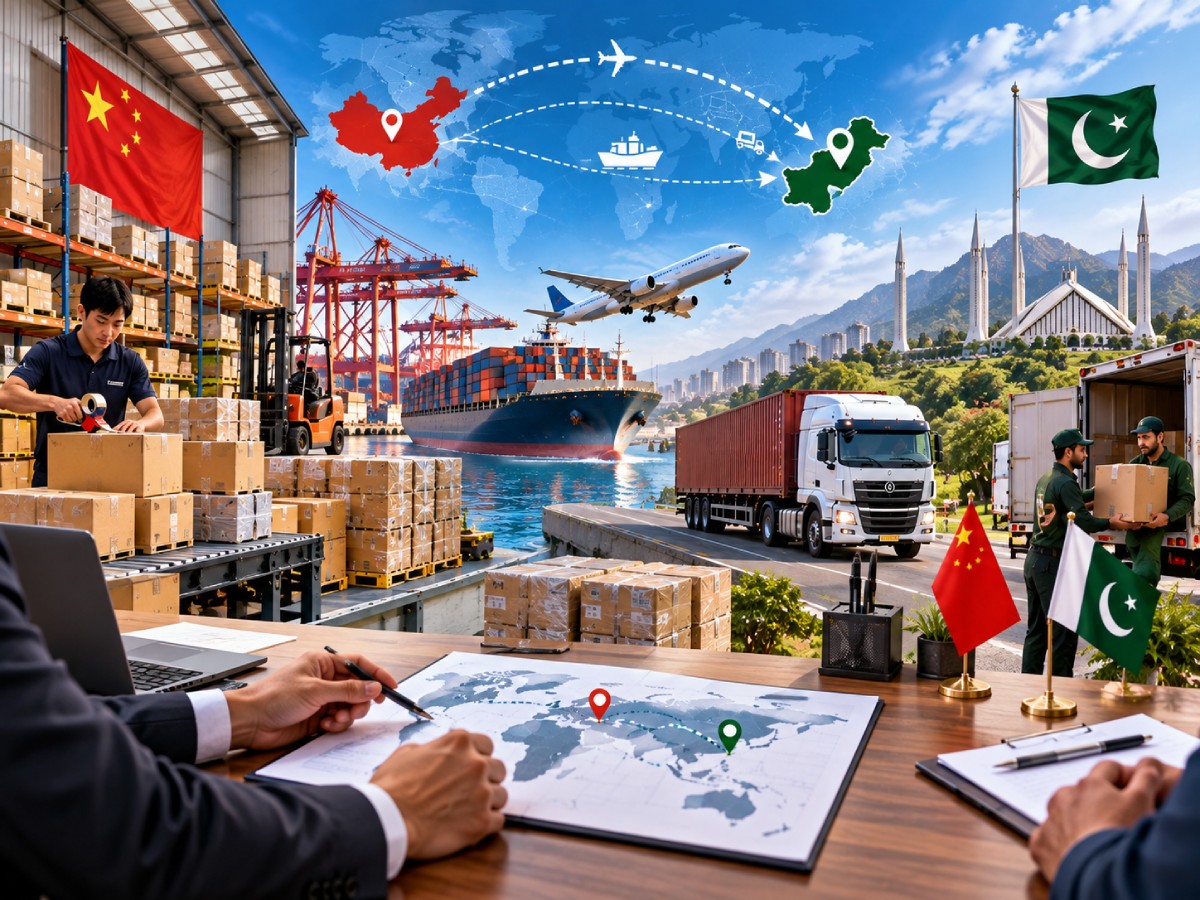
Almeer Sourcing & Cargo Company can help businesses coordinate their China-to-Pakistan sourcing and cargo requirements, depending on the product, shipment size, destination, and service required.
Choosing the right logistics and sourcing partner can make the importing process easier and more organized.
At Almeer Sourcing & Cargo Company, the goal is to help businesses source products from China and move their cargo toward Pakistan efficiently.
Our services can include:
Whether you are a small business owner placing your first order or an established company importing regularly, having a reliable sourcing and cargo partner can help you manage the process more efficiently.
Before placing your first order, keep these tips in mind:
Do not send a large payment to an unknown supplier without performing appropriate checks.
A sample can help you identify quality problems before committing to a larger order.
Do not calculate profitability using the Chinese supplier's product price alone.
Verify the appropriate HS/PCT classification and applicable import requirements before shipment.
Know exactly whether your quotation is EXW, FOB, CIF, DAP, DDP, or another arrangement.
Missing or incorrect documents can cause unnecessary delays.
Pakistan's import requirements can change through amendments and notifications. The Ministry of Commerce published further amendments to the Import Policy Order during 2026, so always check the latest requirements applicable to your product.
The cheapest quotation is not always the cheapest overall solution if it results in delays, unexpected charges, or documentation problems.
If you are a new importer, consider testing your supplier and logistics process before committing significant capital.
A reliable sourcing and cargo partner can help reduce the complexity involved in international procurement and transportation.
Yes, businesses can source products from China, but the applicable requirements depend on the nature, value, quantity, and type of goods. Commercial imports should be handled according to the applicable customs, import, tax, and banking requirements.
For larger and heavier shipments, sea freight can often be more economical than air freight. For smaller or urgent shipments, air freight may be more practical.
The cheapest option depends on the shipment's weight, volume, product type, origin, destination, and required delivery time.
You may choose to work with a customs clearing agent or logistics provider to help manage the clearance process. For businesses unfamiliar with Pakistan's customs procedures, professional assistance can make the process easier.
Almeer Sourcing & Cargo Company can assist businesses with China sourcing and cargo requirements, subject to the product category, supplier, shipment details, and applicable regulations.
Calculate the complete landed cost rather than only the supplier's price.
Consider:
Product Cost + China Charges + International Freight + Customs Duties + Taxes + Clearance + Local Delivery = Estimated Landed Cost
It can be profitable when the product has sufficient market demand and the complete landed cost allows for a reasonable margin.
Profitability depends on:
Always calculate the complete landed cost before placing an order.
Importing products from China to Pakistan can create significant opportunities for retailers, wholesalers, online sellers, manufacturers, and entrepreneurs. However, successful importing requires careful planning.
From selecting a reliable supplier and checking product quality to choosing the right shipping method, preparing documentation, understanding customs requirements, and calculating the landed cost, every step matters.
If you are planning to import products from China to Pakistan in 2026, Almeer Sourcing & Cargo Company can help you coordinate your sourcing and cargo requirements and make the process more organized.
Before shipping any product, always confirm the latest applicable Pakistani import, customs, tax, banking, and regulatory requirements for your specific goods.
Looking to source and ship products from China to Pakistan? Contact Almeer Sourcing & Cargo Company to discuss your sourcing and cargo requirements.

Theresa Webb
02 June 2024 at 03:30 pmDocumentation only proves a company exists. It does not prove the goods are right. Before the balance payment is released, someone independent should physically see the cargo: count the cartons, open a sample of them, measure the product against your specification, photograph labels and shipping marks, and confirm the packing will survive four to six weeks at sea. A shortage or a wrong colourway found in the supplier's warehouse is a conversation. The same problem found in Karachi is a loss you will absorb.
Cameron Williamson
02 June 2024 at 03:30 pmDocumentation only proves a company exists. It does not prove the goods are right. Before the balance payment is released, someone independent should physically see the cargo: count the cartons, open a sample of them, measure the product against your specification, photograph labels and shipping marks, and confirm the packing will survive four to six weeks at sea. A shortage or a wrong colourway found in the supplier's warehouse is a conversation. The same problem found in Karachi is a loss you will absorb.